Lot maintenance, done around your business hours
Collin County is in the middle of a commercial building wave — new retail strips along 380 and 75, new churches and schools chasing the rooftops in Celina, Anna and Melissa, and thousands of existing lots in McKinney, Frisco and Allen quietly fading in the Texas sun. Asphalt here takes a beating from both ends: hundred-degree summers oxidize the surface, and the same expansive clay that cracks foundations moves pavement enough to open cracks that let water in. Striping and sealcoating are not cosmetics — they are the maintenance cycle that decides whether a lot lasts fifteen years or twenty-five, whether your ADA and fire lane markings pass inspection, and what a customer thinks of the property before they ever reach the front door.
McKinney Lot Striping connects property managers, business owners, churches, schools and HOAs across McKinney and Collin County with a local, insured striping and sealcoating contractor. New layouts and re-stripes, sealcoating on a maintenance cycle, ADA-compliant accessible stalls, fire lane marking that passes the marshal's inspection, crack sealing and warehouse floor striping — scheduled nights and weekends so the lot is back in service when your doors open.
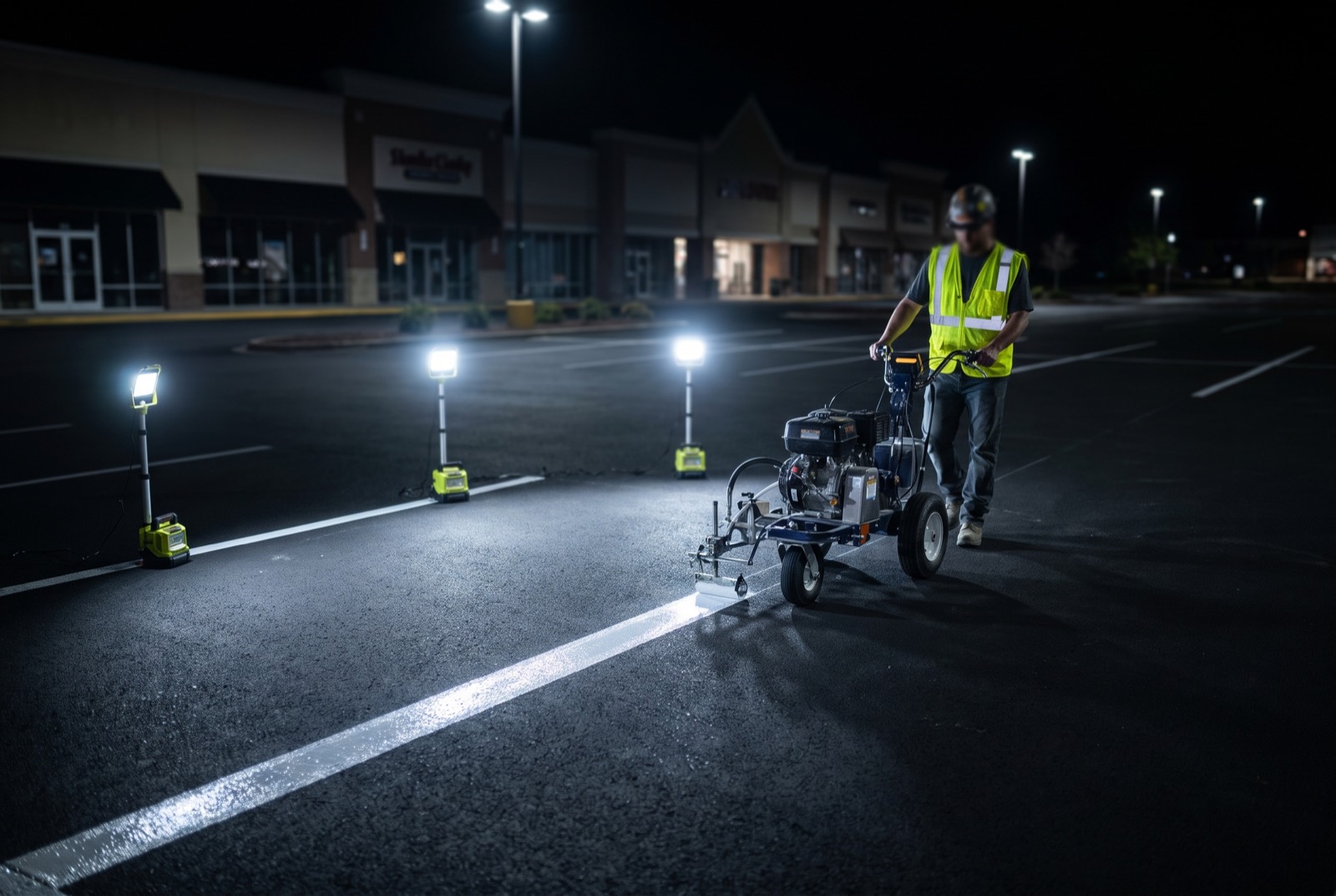
Most lots are striped overnight - closed at ten, open for business by morning.
What we handle
Line Striping & Re-Striping
Lines are the first thing a visitor reads about a property, and Texas sun erases them faster than almost anywhere - a…
Asphalt Sealcoating
Asphalt is held together by a petroleum binder, and the North Texas sun cooks that binder out of it a little every…
ADA & Accessibility Compliance
Accessible parking is the part of a lot where paint meets law. Federal ADA rules and the Texas Accessibility…
Fire Lane Striping
Fire lanes are the markings with a code book behind them. Local fire codes across Collin County require designated…
Crack Sealing & Asphalt Maintenance
Every pothole in Collin County started life as a hairline crack. Water gets in, the clay beneath swells and shrinks…
Warehouse & Floor Striping
The same crews and layout discipline that stripe parking lots also stripe the inside of buildings, and Collin County…
Re-stripe or sealcoat first?
Re-stripe alone when the asphalt is sound and the lines are just faded — it is the cheapest instant facelift a property can buy. Sealcoat first, then stripe when the surface has gone grey and dry or shows fine cracking: sealcoat protects the asphalt, but it also covers every existing line, so the two jobs belong in the same visit. Doing them together costs less than doing them a season apart, and every sealcoat needs new stripes anyway — plan them as one project.
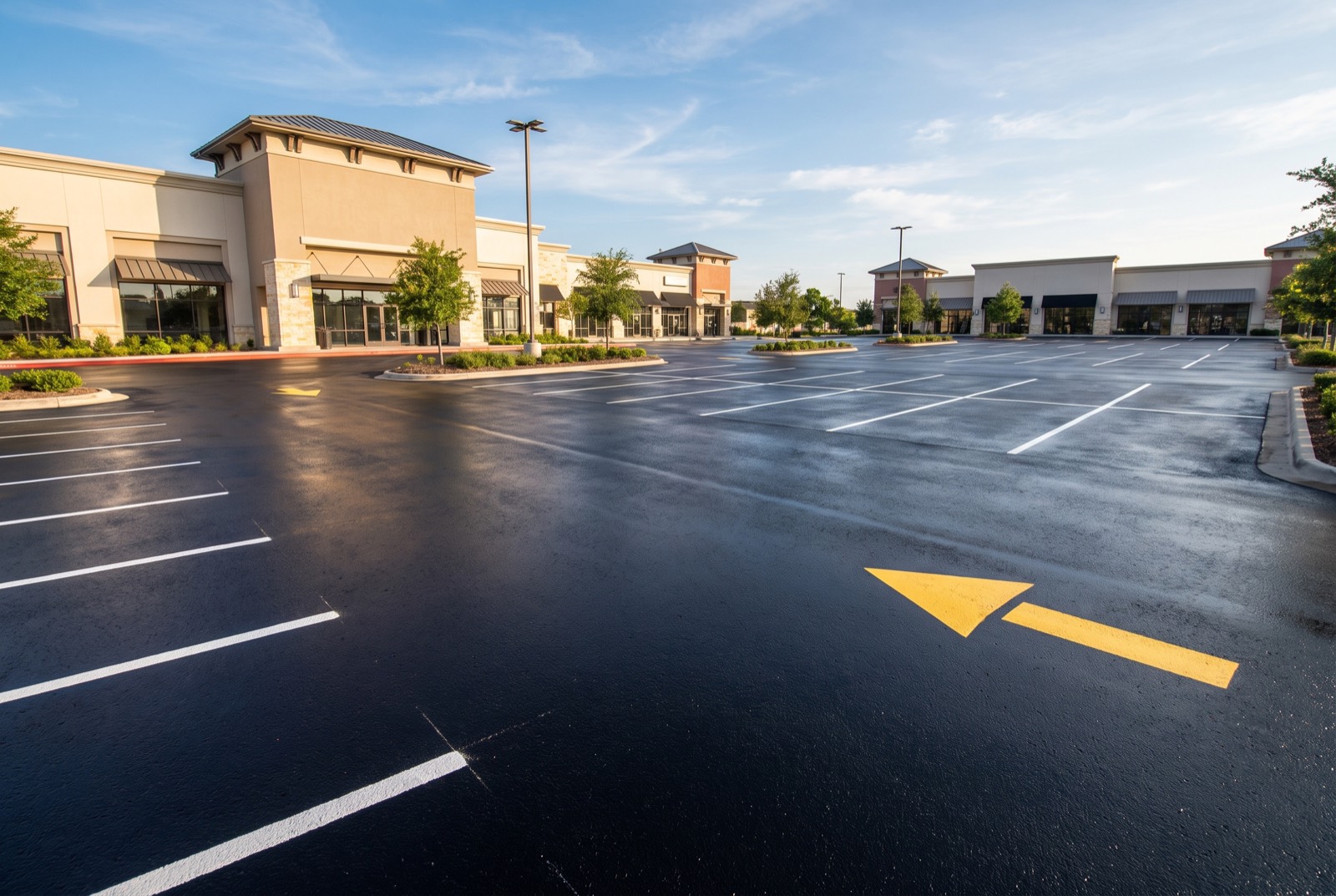
A sealcoat-and-stripe brings a faded lot back to new - and buys the asphalt years.
Where we go
Commercial work across McKinney and all of Collin County. If your property or portfolio sits outside the cities listed, call anyway — multi-site portfolios are exactly the work we schedule best.
McKinney, TX
Home base and the county seat - one of the largest commercial inventories in Collin County, from…
Frisco, TX
The county's retail heavyweight - the Star, Legacy West spillover, and mile after mile of centers…
Allen, TX
Watters Creek, the outlet corridor and a broad base of offices, churches and schools. Mature lots…
Prosper, TX
New retail following the rooftops along Preston and 380 - much of it on its first striping and its…
Celina, TX
The fastest-growing city in the country, and the commercial wave is just arriving - grocery…
Anna, TX
Anna Town Square, the new Kroger Marketplace corridor and a wave of pads and strips along US 75 -…
Melissa, TX
H-E-B and Kroger Marketplace under construction, Melissa Park Village on the way - the retail…
Princeton, TX
Recently the fastest-growing city in America, with its first serious retail wave - including a new…
Common questions
How often should a parking lot be re-striped in Texas?
Most commercial lots here need fresh lines every one to two years — the sun fades traffic paint faster in Texas than almost anywhere, and high-traffic drive aisles wear faster still. If you are sealcoating on a two-to-three-year cycle, the re-stripe rides along with it automatically, since sealcoat covers the old lines.
How often should a lot be sealcoated?
Every two to three years for a typical commercial lot, starting when the asphalt is three to five years old. More often than that wastes money; much less often and the surface oxidizes, cracks open, and you start trading cheap maintenance for expensive patching. A lot kept on cycle can last a decade or more beyond a neglected one.
Do you work nights and weekends so the lot stays open?
Yes — that is normal in this trade, not a premium request. Retail and office lots are usually done overnight or in sections so part of the lot stays open; church lots are scheduled around service days; schools get summer and weekend slots. Tell us the operating hours and the bid comes back with a schedule that fits them.
How many ADA accessible stalls does my lot need?
It scales with lot size: a lot with up to 25 stalls needs one accessible stall, and the required count climbs from there, with a share of them van-accessible with the wider access aisle. Location, slope and signage all have requirements too. If your lot has not been reviewed since a remodel or a re-stripe, an audit is cheap insurance — striped-over access aisles and missing signs are the most common failures we find.